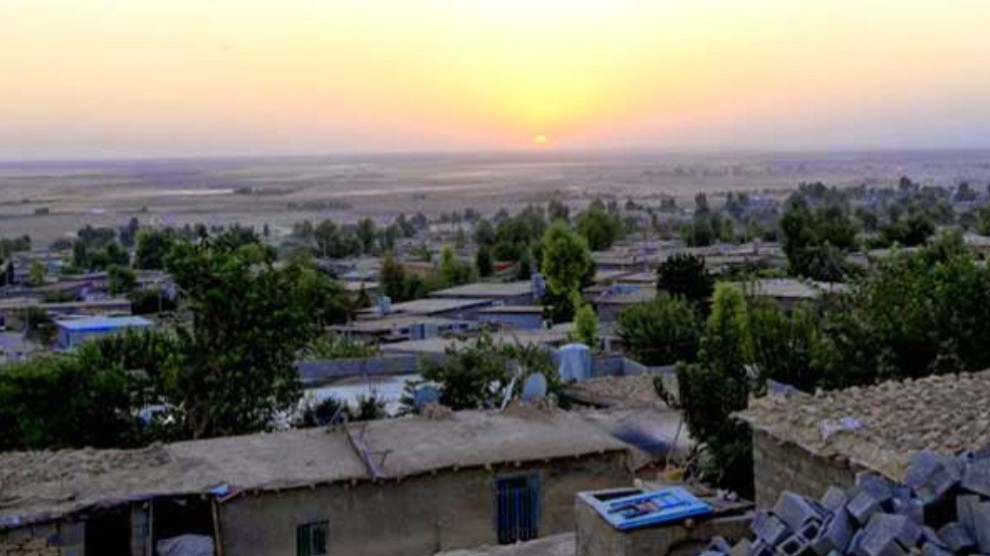
The embargo imposed on Makhmur Refugees Camp has been going on for ten months. Yet people repeat the same maxim they used to say: “We will not surrender to the policy of the enemy, no matter what may come.”
During this time, the residents of the camp, located 60 kilometers southwest of Hewlêr (Erbil), have put pressure and appealed to the authorities for the lifting of the embargo without success.
Since 17 July 2019, the PDK and its peshmergas have arbitrarily restricted the freedom of movement of the more than 12,000 residents of Maxmur Camp. Nobody is allowed through the checkpoint, an entry and exit ban is imposed to the entire area of the autonomous region. The camp is de facto cut off from the outside world.
The security forces of the PDK justify the embargo as a repressive measure for the killing of an agent of the Turkish secret service MIT.
Osman Köse, Turkish vice consul and intelligence officer for southern Kurdistan, was shot dead in a restaurant in Hewlêr on 17 July 2019. The embargo was imposed on Maxmur almost immediately after the killing, which was then attributed to sympathizers of the Kurdistan Workers’ Party (PKK).
Security authorities presented a group of men who had no connection to the refugee camp as the allegedly responsible for the attack. Two of them, Muhammed Besiksiz and Mazlum Dag – who refused to sign the prepared confessions – were sentenced to death by a court in Hewlêr in February. Nevertheless, the autonomous government insists on the embargo on Maxmur. Meanwhile, reports of systematic torture against Besiksiz and Dag continue. Just a few weeks ago, the two went on a hunger strike to protest their conditions of detention.
Maxmur is home to people who were forced to leave their villages in the Botani region of northern Kurdistan in the 1990s due to the repression of the Turkish state. After years of odyssey and peregrination in various camps, the refugees finally settled on the edge of the desert in 1998. Today Maxmur is a small town, which despite poverty, constant threats and attacks, is a place of peace and collective self-determination.
The Turkish government has long called the refugee camp, which is officially under the protection of the United Nations, a “military camp” and a place of retreat for the PKK and calls for its closure.
There are repeated fatal attacks on Maxmur, so much so, that even one day after the embargo was imposed, the camp was bombed by the Turkish Air Forces. Two people were injured. The PDK justifies these attacks with the influence of the PKK, which it said, stays there. The Turkish state legitimizes its attacks by referring to these statements. Barzani’s party is giving Turkey supremacy in south Kurdistan little by little. At the end of the year, the PDK international legal aid coordinator even claimed that there would be “military groups” in Maxmur that would not allow “organizations or elected local government agencies to return to do people’s day-to-day administration and provide basic services.”
The embargo has subjected Maxmur Camp residents to a collective punishment for 311 days. The hostile attitude of the PDK is not new – the past 26 years have been characterized by close collaboration with the Turkish state.
In spite of all difficulties, Maxmur people are committed to a peaceful life with dignity. There have been no actions against the South Kurdish regional government, nor against the central government in Baghdad.
In 2014, the camp resisted the “Islamic State” and held the gateway to Hewlêr. As in the past, despite the embargo and in the midst of the coronavirus pandemic, the same maxim applies to people today: “We will not surrender to the policy of the enemy, no matter what may come.”