By a Kurdish Humanitarian Expert
Today, as long-standing walls begin to crack and new rays of hope finally pierce the horizon, the Kurdish people stand once again at the edge of a historical precipice. Not the precipice of war, but of an unfinished peace.
After four decades of a conflict that has claimed over 40,000 lives, leaving thousands of villages destroyed and millions of hearts broken, the time has come to assess the price paid and the stakes involved. Our people have taken their step. The question is: will the Turkish state take theirs?
I. Recent Sacrifices: Extending a Hand to Ankara
The year 2025 marked a seismic shift. The Kurdish movement has made a political and human act of faith unprecedented in its history:
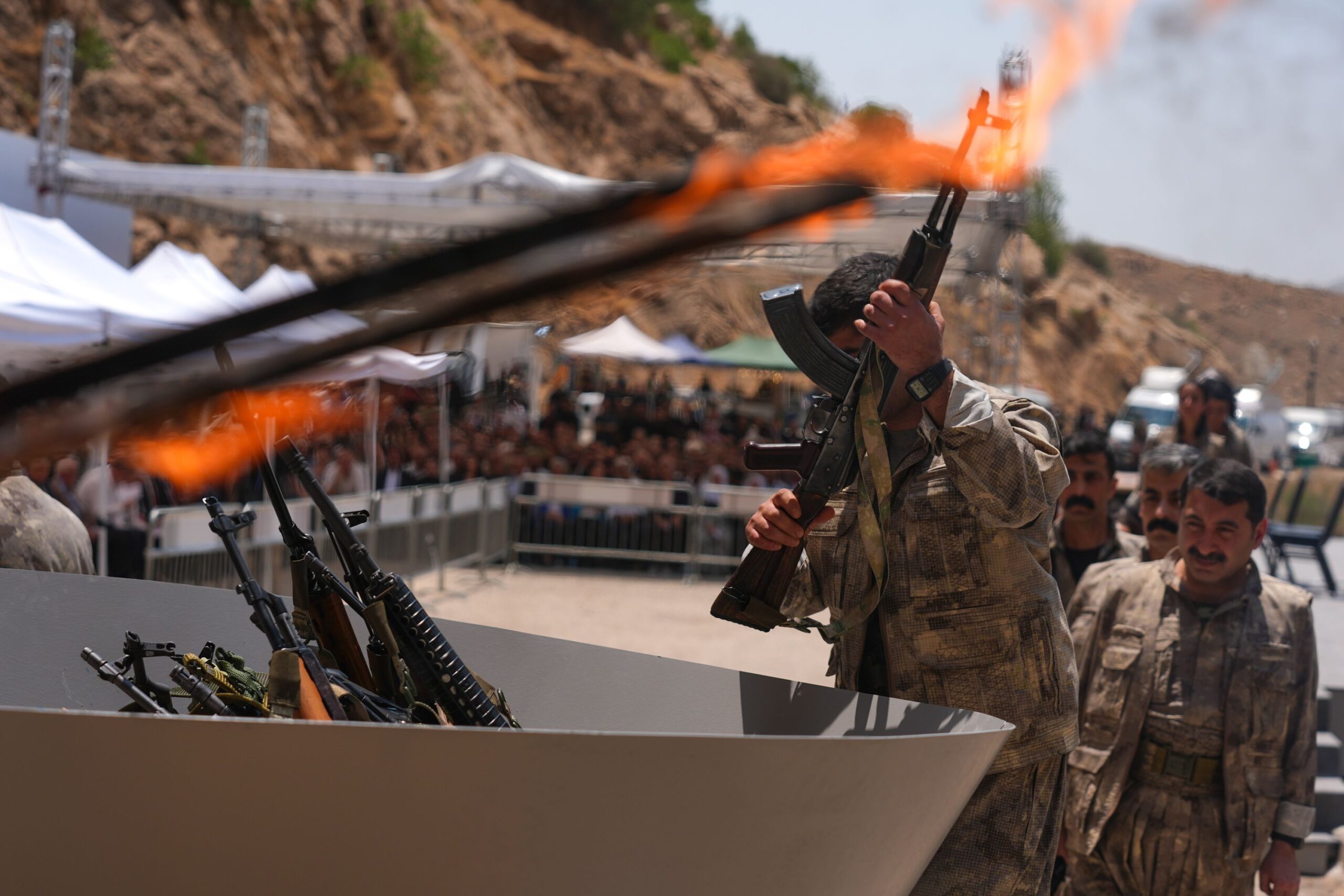
- The Abandonment of Armed Struggle: In February, and then confirmed in May 2025, the imprisoned leader Abdullah Öcalan called for the dissolution of the Kurdistan Workers’ Party (PKK), demanding that the conflict be resolved solely through political and democratic means. The PKK responded by announcing its dissolution and an immediate ceasefire.
- A Withdrawal Full of Uncertainty: The organization announced the withdrawal of its remaining fighters from Turkish territory into Iraqi Kurdistan—a heavy logistical and symbolic move. This gesture is a sacrifice for thousands of individuals who dedicated everything to the armed struggle, and who now face existential uncertainty.
- The Democratic Bet: These decisions represent a risky gamble on Ankara’s willingness to see Kurds no longer as enemies to be eliminated, but as full and equal citizens. Our legal political movement (the DEM Party) has redoubled its efforts to engage in parliamentary dialogue.
What we have sacrificed is the last pretext for violence. Our message is clear: we are ready to bury the weapons for politics.
II. The Current Stake: Breaking the Cycle of Repression
Today, the main humanitarian and political stake is not the PKK, it is the reciprocity of the Turkish state.
🛑 The Wall of Silence in Ankara
Despite these historic signals of appeasement, the Turkish state’s response is, for now, marked by inertia and ongoing repression:
- The Judicial Sword of Damocles: Kurdish mayors, parliamentarians, and activists—even those from the legal party (DEM)—remain under the constant threat of arrests and dismissals on charges of “terrorism,” using the same judicial apparatus that has criminalized our very existence for decades.
- The Isolation of Öcalan: The Kurdish leader, who is the symbolic key to the process, remains subject to prison isolation, preventing any active role from him. Releasing him or improving his conditions would be the strongest sign of Ankara’s sincerity.
- Cultural Denial: The fundamental demands for linguistic and cultural rights (Kurdish-language education, constitutional recognition) have still received no concrete legal or constitutional translation.
Without concrete actions from the state—amnesty laws, the release of elected officials, constitutional reform—the Kurdish sacrifice for peace risks being exploited as a simple military victory by nationalist rhetoric.
🌐 The Regional Stake: Rojava and Iraqi Kurdistan
The hope for peace in Turkey also has crucial repercussions beyond its borders, where millions of Kurds face existential threats:
- The Threat to Northern Syria (Rojava): Turkey continues to view the Kurdish forces in Syria (SDF/YPG), which played a key role against ISIS, as merely an extension of the PKK. Peace in Turkey would allow for an end to Turkish military incursions that destabilize millions of people and threaten the democratic achievements of the Syrian Kurdish autonomy.
- Fragility in Iraq: The PKK’s withdrawal from Turkey to the mountains of Iraqi Kurdistan creates increased pressure on the Kurdistan Regional Government (KRG), caught between Ankara’s hammer and the PKK’s anvil.
Peace in Turkey is not just a domestic issue; it is a factor of humanitarian stability for the entire Middle East.
III. Our Expectation: A Peace Based on Justice
As humanitarians, our expectation is not independence, but dignity. We demand a peace that:
- Recognizes Our Identity: A new Turkish Constitution that includes the Kurdish people as a founding component, with guaranteed linguistic and cultural rights.
- Guarantees Local Democracy: An end to arbitrary dismissals of elected officials and the establishment of genuine decentralization so that Kurds can manage their own local affairs.
- Brings Transitional Justice: A Truth and Reconciliation Commission to heal the wounds of the past and offer justice to victims on both sides of the conflict.
The Kurdish people have chosen courage by renouncing arms. We now await the Turkish state to choose political courage by renouncing nationalism and repression. The world cannot afford to remain silent and allow another opportunity for peace to turn into a new tragedy.